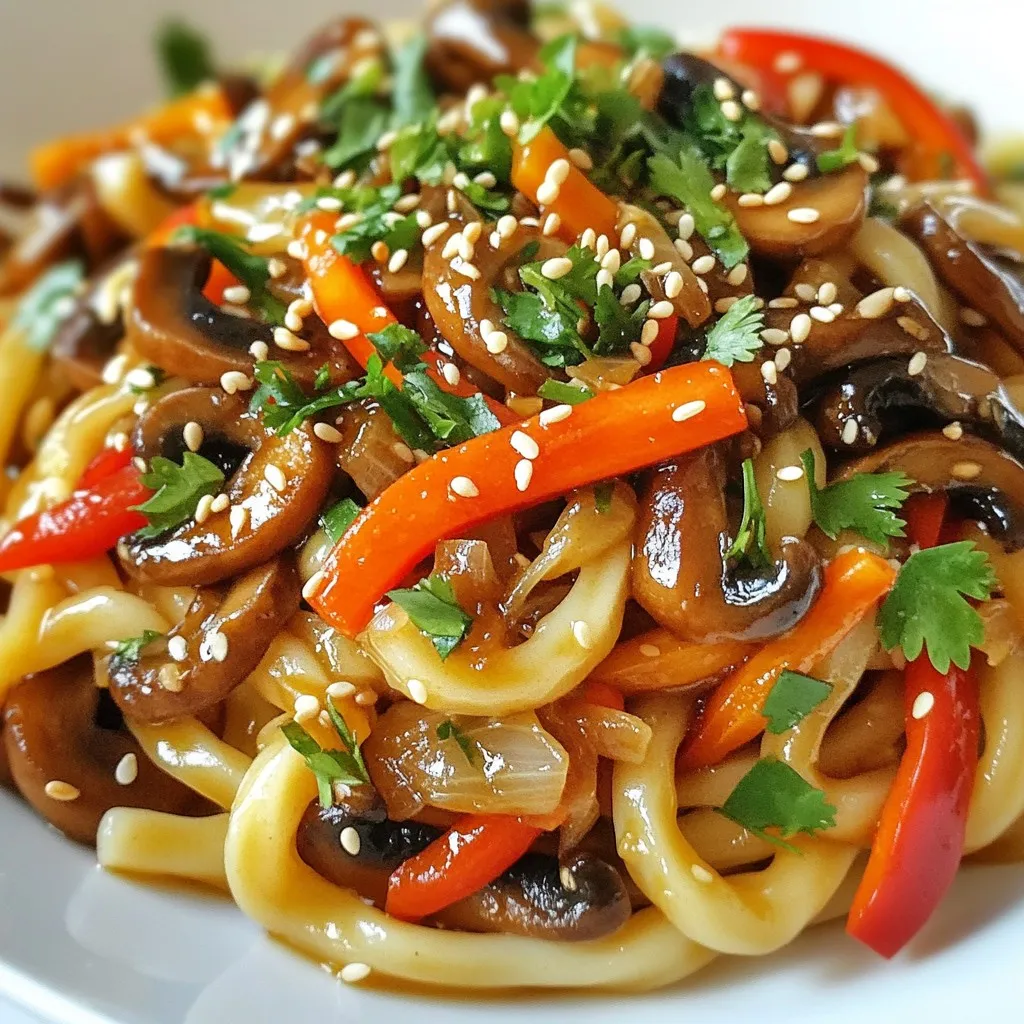
Are you ready to whip up a delicious meal in no time? Yaki Udon noodles are quick, easy, and full of flavor. In this guide, I’ll show you how to create a stir-fry that impresses. We’ll cover the key ingredients, share step-by-step instructions, and offer tips to make your dish shine. Whether you’re a beginner or a kitchen pro, you’ll enjoy this tasty journey into Japanese cuisine!
Why I Love This Recipe
- Quick and Easy: This dish comes together in just 20 minutes, making it perfect for busy weeknights.
- Flavor Packed: The combination of soy sauce, sesame oil, and fresh veggies creates a deliciously savory meal.
- Customizable: You can easily swap in your favorite vegetables or proteins to suit your taste.
- Healthy Choice: Loaded with vibrant vegetables, this dish is both nutritious and satisfying.
Ingredients
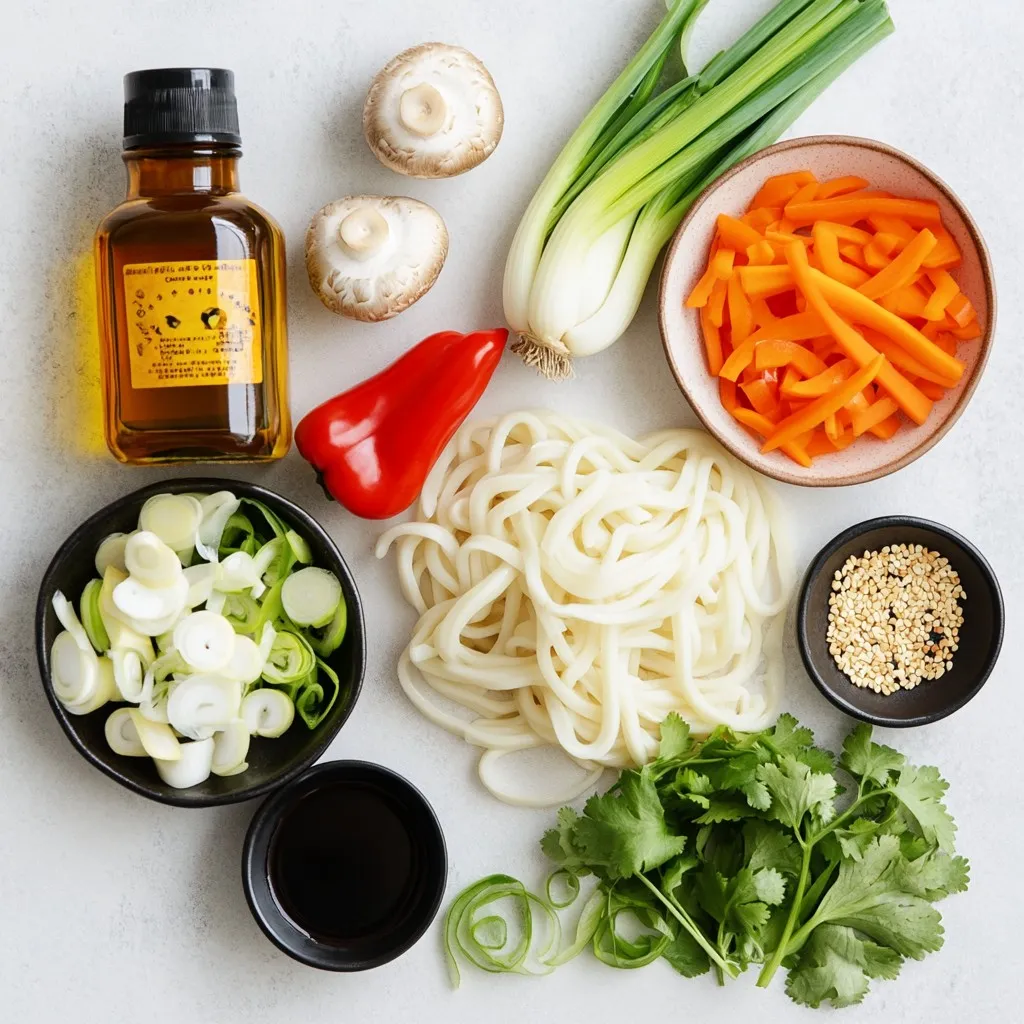
Key Ingredients for Yaki Udon Noodles
– Udon Noodles: You can choose between fresh or frozen. Fresh noodles offer a softer bite, while frozen noodles are handy and quick to prepare. If you use frozen, follow the package instructions to cook them just right. This will save time and keep them tasty.
– Vegetables: The main veggies include shiitake mushrooms, bell pepper, bok choy, and carrot. Shiitake mushrooms bring a deep umami flavor. Bell peppers add a nice crunch and sweetness. Bok choy gives a fresh, green taste. Feel free to mix in any other vegetables you like.
– Condiments: Soy sauce is a must for saltiness. Oyster sauce adds depth to flavor but is optional. Sesame oil gives a lovely nutty aroma and richness. Don’t forget to sprinkle some sugar to balance the flavors.
These ingredients come together to create a colorful and tasty dish. Each adds its own unique taste, making your yaki udon meal special.
Step-by-Step Instructions
Cooking the Noodles
To cook udon noodles, I start by choosing between frozen or fresh. If you have frozen noodles, follow the package directions. Usually, this means boiling them for a few minutes. When they are ready, drain them and set them aside. If you use fresh noodles, just loosen them gently and set them aside too.
Preparing the Vegetables
Next, I prepare the vegetables. I slice shiitake mushrooms, julienne the bell pepper and carrot, and chop the bok choy. I also chop green onions and mince garlic. Prepping these ingredients is key. It makes cooking faster and easier. When everything is ready, we can cook without a rush.
Stir-Frying Techniques
Now, let’s heat the oils. I use a large skillet or wok for this. I add one tablespoon of sesame oil and one tablespoon of vegetable oil. Heat them over medium-high heat until they shimmer. This shows they are hot enough.
I add minced garlic and grated ginger to the pan. I stir-fry them for about 30 seconds. This brings out their lovely scents. But be careful not to burn them!
Next, I toss in the sliced mushrooms, bell pepper, carrot, and bok choy. I stir-fry these for about 3 to 4 minutes. I want them tender but still crisp. This keeps the dish fresh and bright.
After that, I add the cooked udon noodles to the skillet. I gently toss everything together. I want the noodles to mix well with the vegetables.
Then, I season the dish. I drizzle over soy sauce and add oyster sauce if I want more flavor. I sprinkle a teaspoon of sugar, too. I toss everything again for about 2 to 3 minutes. This allows the noodles to soak up the flavors.
Finally, I season with salt and pepper. I mix it all well and then take it off the heat. The dish is now ready to serve.
Tips & Tricks
Perfecting the Stir-Fry
To make great yaki udon, use high heat. This helps the noodles and veggies cook fast. High heat gives you a nice sear and keeps the flavor locked in. When the oil is hot, add your garlic and ginger. Stir them for just 30 seconds. This makes your kitchen smell amazing!
Avoiding Overcooking Vegetables
Keep your veggies crisp for the best texture. Stir-fry them for only 3 to 4 minutes. You want them tender but still bright and crunchy. Remember, they will keep cooking a bit after you take them off the heat. So, don’t wait too long!
Flavor Enhancements
How to Adjust Seasonings
Taste your yaki udon as you cook. Add more soy sauce for salt or oyster sauce for depth. A little sugar can balance the flavor too. If it feels bland, just add a bit more seasoning. Make it yours!
Optional Ingredients for Extra Depth
For an extra flavor kick, try adding different veggies. Snap peas, broccoli, or baby corn work great. You can even toss in some cooked chicken or tofu for protein. Get creative with your mix!
Garnishing Ideas
Creative Ways to Serve Yaki Udon
Presentation matters! Serve your yaki udon in a big bowl. Top it with sesame seeds and fresh cilantro. You can also add sliced green onions for color. A sprinkle of chili flakes adds a nice kick if you like spice.
Suggested Pairings for Accompaniments
Yaki udon pairs well with simple sides. Try a light salad or some spring rolls. A small bowl of miso soup can also make a nice touch. These sides balance the rich flavors of the noodles. Enjoy the meal!
Pro Tips
- Use Fresh Noodles: Fresh udon noodles have a superior texture and flavor compared to frozen ones. If you can find them, opt for fresh for the best results.
- Customize Your Veggies: Feel free to substitute or add any vegetables you enjoy, such as snap peas or broccoli, to suit your taste and seasonal availability.
- Adjust the Seasoning: Taste your dish before serving and adjust the soy sauce, sugar, or even spice levels to your preference for a more personalized flavor profile.
- Garnish for Extra Flavor: Don’t skip the garnishes! Sesame seeds and fresh cilantro add a delightful crunch and aromatic freshness that elevate the dish.
Variations
Vegetable Substitutions
Yaki udon is great for using fresh veggies. You can swap in seasonal vegetables like zucchini or snap peas. These add color and crunch. You can also try bok choy, bell peppers, or carrots for a mix.
If you have dietary needs, consider using mushrooms or cabbage. These options work well and keep the dish hearty. Feel free to be creative!
Proteins to Add
You can make yaki udon with chicken, beef, or tofu. Each protein adds a different flavor. For chicken, cut it into strips and cook for about five minutes. Beef strips should cook for about four minutes.
Tofu needs a little more time if you want it crispy. Cook it for around six to seven minutes. Remember to brown it well for the best taste.
Regional Differences
Yaki udon varies across Japan. In Osaka, people often use thick, chewy noodles. In Tokyo, the noodles are thinner. Each region adds local ingredients, too.
For example, Hokkaido uses seafood like shrimp or crab. In contrast, southern regions might use more spicy flavors. These local twists make every bowl unique and special!
Storage Info
Storing Leftover Yaki Udon
After enjoying your yaki udon, you may have leftovers. Always cool them down before storing. Use an airtight container to keep them fresh. Place the container in the fridge right away.
– Best Practices for Refrigeration: Make sure to seal the container well. This keeps moisture in and prevents odors from other foods.
– How Long Yaki Udon Lasts in the Fridge: You can safely keep yaki udon in the fridge for 3 to 4 days.
Reheating Tips
Now, let’s talk about reheating. You can use either a microwave or a stovetop. Each method has its perks.
– Microwave vs. Stovetop: The microwave is quick and easy. Just heat for 1-2 minutes. Stir halfway to warm evenly. The stovetop takes more time but adds better texture. Heat in a pan over medium heat for 5-7 minutes.
– Ensuring Noodles Don’t Become Soggy: No one likes soggy noodles! Add a splash of water or oil when reheating. This helps steam them and keeps them soft yet firm.
Freezing Options
If you have more leftovers than you can eat, freezing is a great choice.
– Can Yaki Udon Be Frozen?: Yes! Yaki udon freezes well. Just make sure to cool it completely first.
– How to Properly Freeze and Thaw: Divide the noodles into portions. Use freezer-safe bags or containers. Label them with the date. To thaw, place them in the fridge overnight or use the microwave on defrost. Heat thoroughly before eating.
FAQs
What are Yaki Udon Noodles Made Of?
Yaki udon noodles are made from simple ingredients. The main ingredient is udon noodles. You can choose fresh or frozen. Here are the common ingredients:
– 300g udon noodles (fresh or frozen)
– 1 tablespoon sesame oil
– 1 tablespoon vegetable oil
– 1 cup shiitake mushrooms, sliced
– 1 red bell pepper, julienned
– 1 cup bok choy, chopped
– 1 carrot, julienned
– 2 green onions, chopped
– 3 cloves garlic, minced
– 1 inch ginger, grated
– 3 tablespoons soy sauce
– 1 tablespoon oyster sauce (optional)
– 1 teaspoon sugar
– Salt and pepper to taste
– Sesame seeds for garnish
– Fresh cilantro for garnish (optional)
Each ingredient adds flavor and texture. Udon noodles give a chewy base. Shiitake mushrooms and bell peppers add depth. Bok choy and carrots bring crunch and color.
Can I Make Yaki Udon Vegan?
Yes, you can easily make yaki udon vegan. To do this, substitute any animal products. Here are some tips:
– Use vegetable oil instead of sesame oil if you prefer.
– Replace oyster sauce with a vegan alternative or just skip it.
– Ensure your soy sauce is vegan-friendly, as some brands may add animal products.
You can also add more vegetables for extra flavor. Try adding zucchini or snap peas. These swaps make the dish plant-based and tasty.
What Dishes Pair Well with Yaki Udon?
Yaki udon pairs well with many side dishes and appetizers. Here are some suggestions:
– Edamame: Steamed and lightly salted, they make a great snack.
– Miso Soup: This warm soup complements the noodles nicely.
– Gyoza: These dumplings add a crispy texture.
– Seaweed Salad: A fresh salad adds a nice contrast.
Each dish brings new flavors to your meal. Feel free to mix and match. Enjoy your cooking!
Yaki Udon offers a tasty mix of fresh noodles, veggies, and sauces. We covered key ingredients like udon noodles and helpful cooking tips. I shared ways to adjust flavors and add proteins too. Don’t forget about storing and reheating leftovers the right way.
When you make your Yaki Udon, explore your own variations. Enjoy the process and make each dish your ow